Download Mendeley
Evolutionary Convergence on a Dihydrofolate Reductase Mutation Drives Trimethoprim-Sulfamethoxazole Resistance in Burkholderia thailandensis.
Guillier, S., Lazennec-Schurdevin, C., Mondange, L., Sarilar, V., Marchandeau, M., Lemoigne, C., Lamer, O., Lescat, M., Schmitt, E., Mechulam, Y., Garrec, J., Biot, F.(2026) ACS Infect Dis 12: 2627-2641
- PubMed: 42599400 Search on PubMedSearch on PubMed Central
- DOI: https://doi.org/10.1021/acsinfecdis.5c01132
- Primary Citation Related Structures:
9SVM, 9SVN - PubMed Abstract:
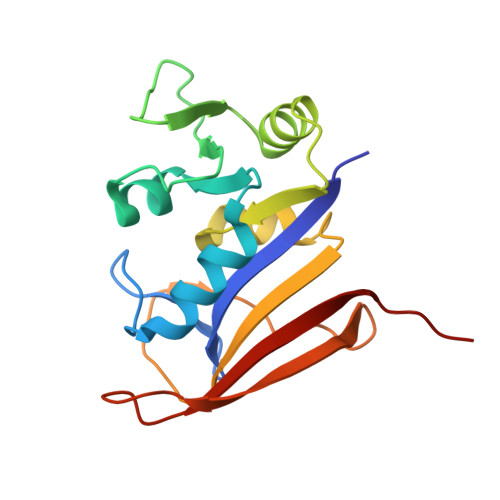
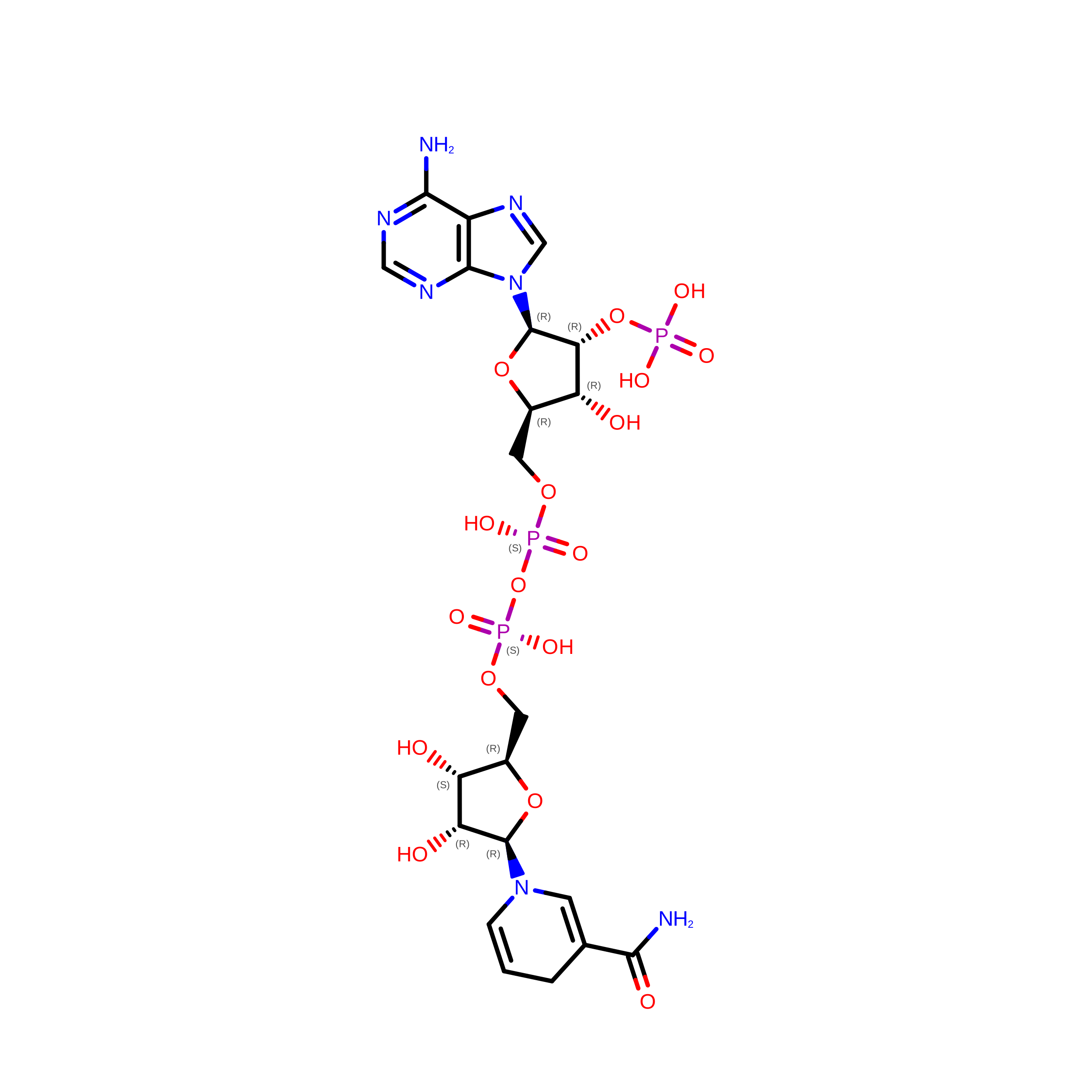
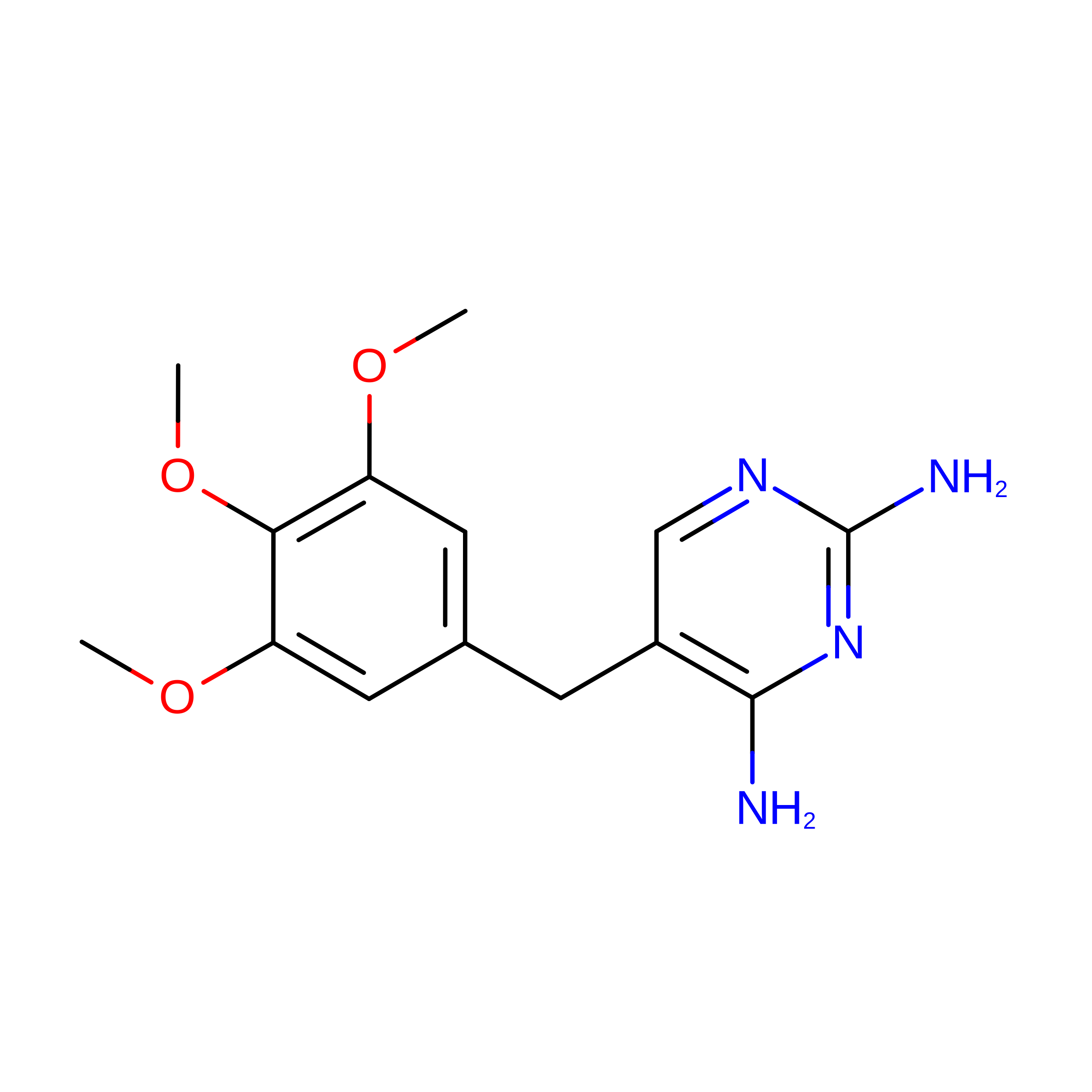
Trimethoprim-sulfamethoxazole (SXT) remains central to melioidosis eradication therapy, yet the genetic basis of resistance evolution in Burkholderia pseudomallei is not fully defined. Using Burkholderia thailandensis as a biosafe surrogate, we subjected populations to stepwise in vitro evolution under increasing SXT concentrations. Whole-genome sequencing revealed rapid population diversification followed by selective sweeps leading to fixation of fitter resistant variants. Early adaptation involved mutations in regulators of RND efflux systems and folate-associated genes, consistent with multifactorial resistance. Despite this heterogeneity, all evolutionary trajectories converged on a single nonsynonymous substitution, I99L, in dihydrofolate reductase (DHFR/FolA), which rose to fixation at high SXT concentrations. This substitution mirrors changes reported in SXT-resistant B. pseudomallei isolates from chronic infections. Allelic reconstruction demonstrated that Bt-DHFR(I99L) is sufficient to confer a 4- to 16-fold increase in trimethoprim MIC. Biochemical and structural analyses showed preserved catalytic activity but reduced trimethoprim binding, consistent with an allosteric resistance mechanism. Together, these findings establish DHFR as a dominant evolutionary target under SXT pressure and support B. thailandensis as a robust model for dissecting resistance evolution in B. pseudomallei.
- Unité Bactériologie, Département Microbiologie et Maladies Infectieuses, CNR-LE Charbon, UMR-MD1-Inserm 1261, Institut de Recherche Biomédicale des Armées (IRBA), Brétigny-Sur-Orge91220, France.
Organizational Affiliation: