Download Mendeley
A Zundel ion in the catalytic proton transfer pathway of [FeFe]-hydrogenase.
Liu, L., Klamke, M.A., Arrigoni, F., Lampret, O., Kleinhaus, J., Apfel, U.P., Hofmann, E., Greco, C., Happe, T., Stripp, S.T., Duan, J.(2026) Phys Chem Chem Phys 28: 7101-7110
- PubMed: 41774038
- DOI: https://doi.org/10.1039/d5cp04267d
- Primary Citation Related Structures:
9RJ9, 9RJO, 9RJQ - PubMed Abstract:
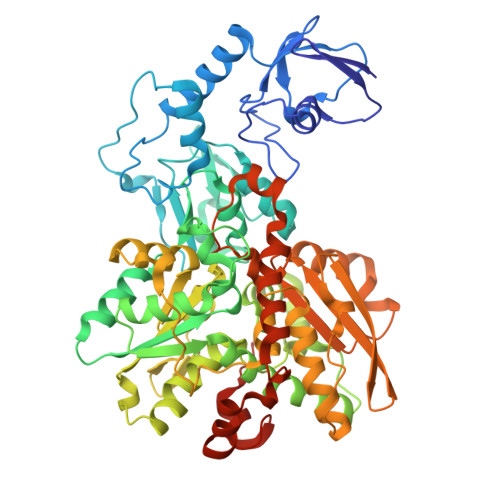
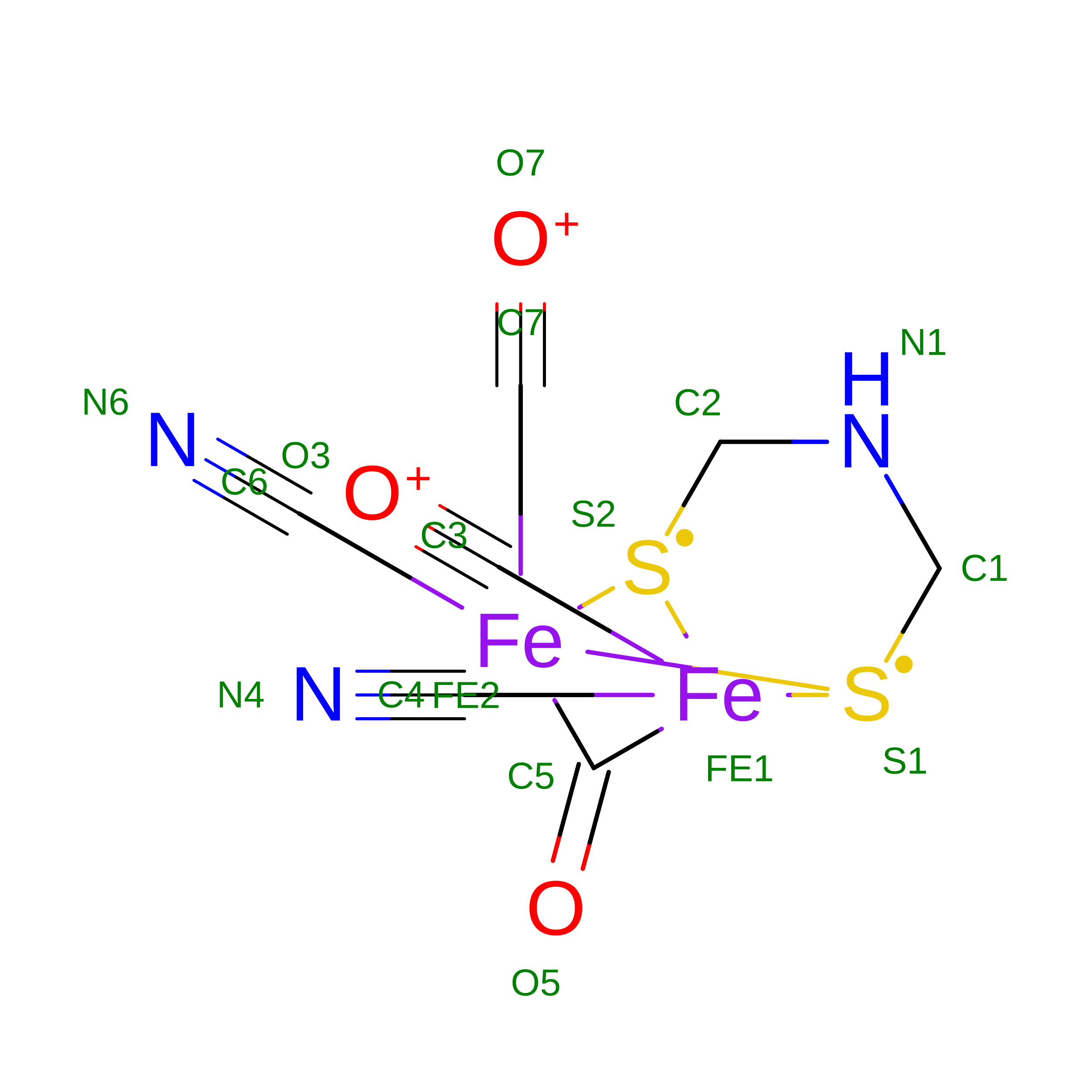
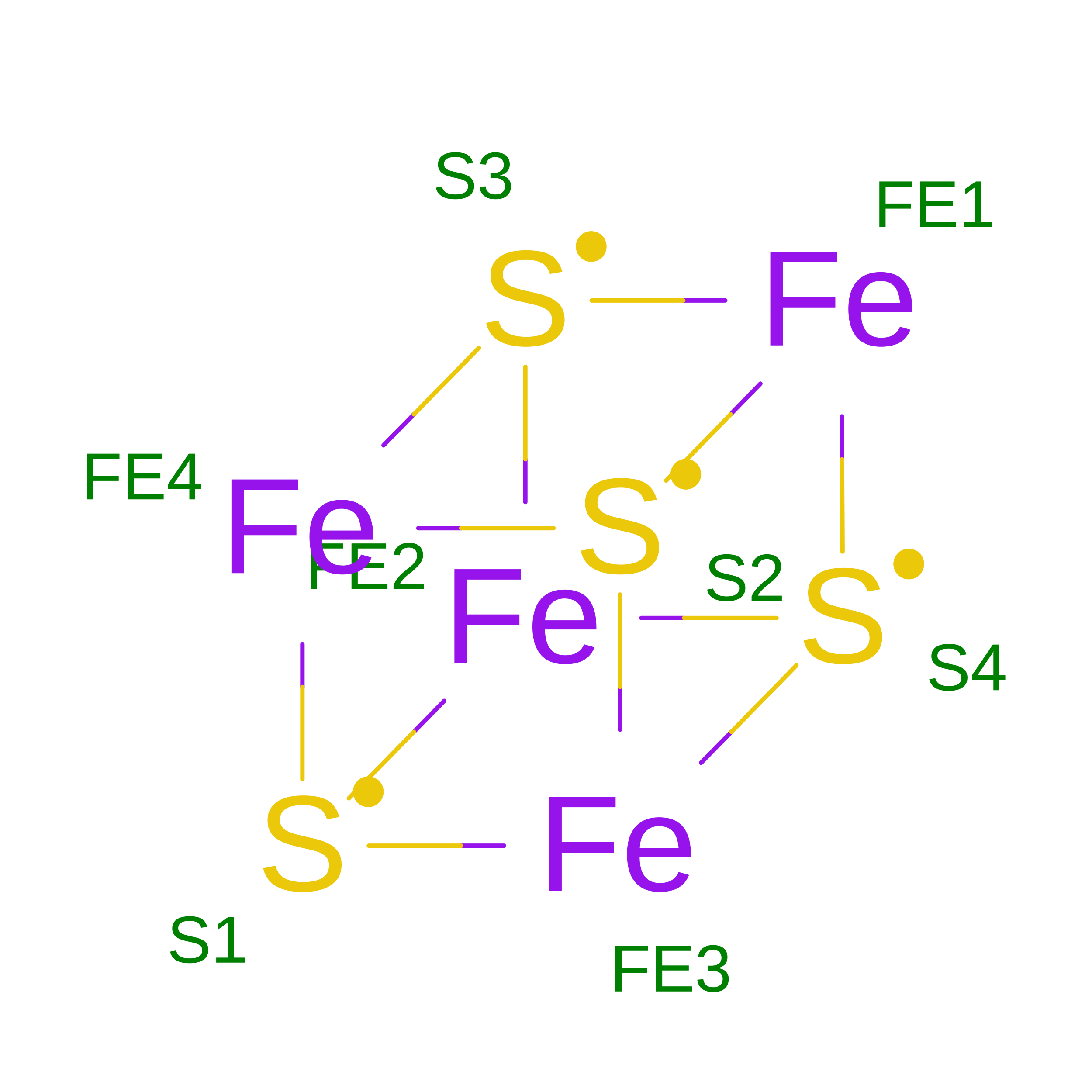
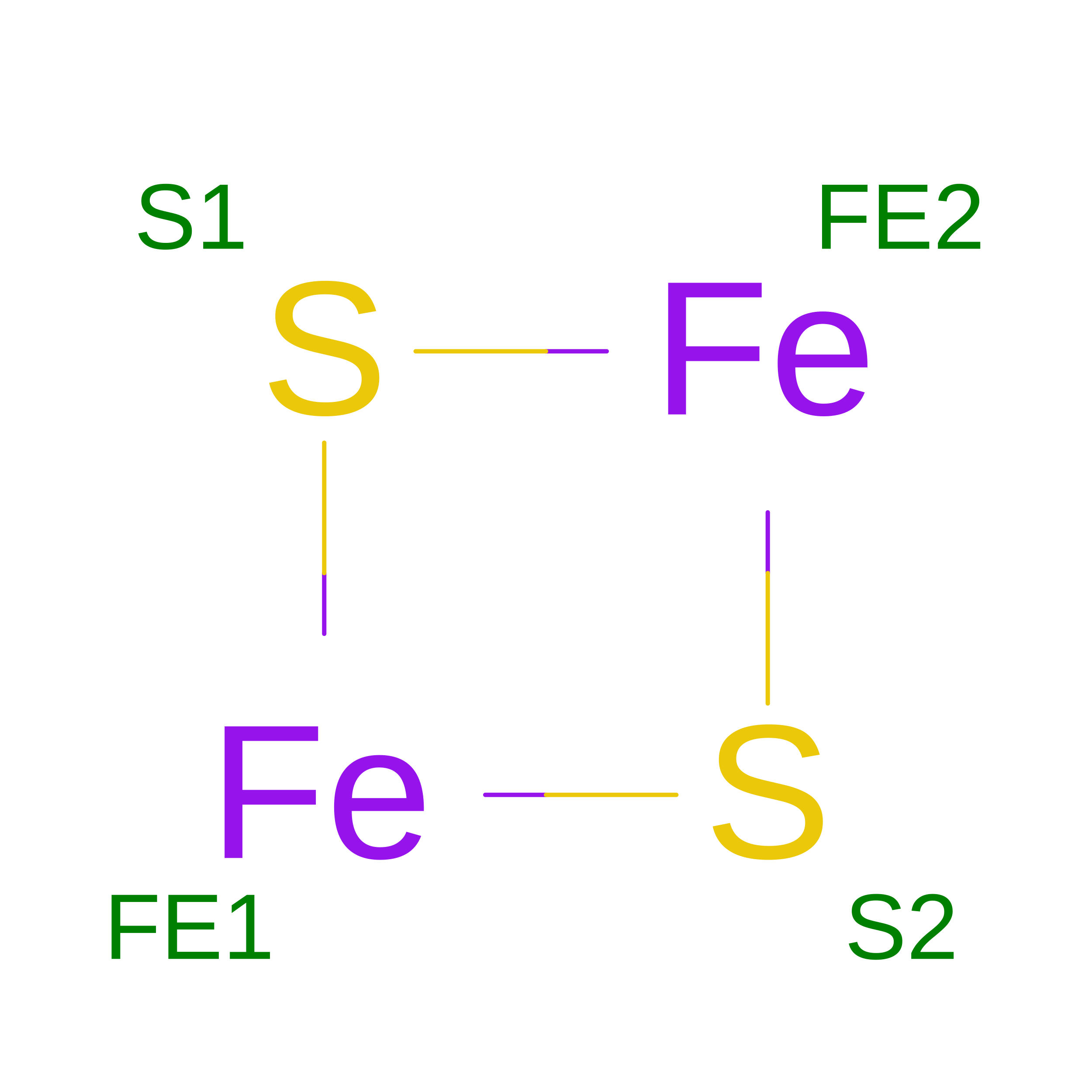
[FeFe]-hydrogenases are metalloenzymes that catalyze the interconversion of protons, electrons, and molecular hydrogen (H 2 ). Their active site cofactor consists of a [4Fe-4S] cluster ([4Fe] H ) and a diiron site ([2Fe] H ), forming the so-called H-cluster. In this work, the putative regulatory proton transfer pathway (PTP) toward the [4Fe] H cluster of [FeFe]-hydrogenase Cp I from Clostridium pasteurianum is characterized by X-ray crystallography, infrared spectroscopy, and quantum mechanical (QM) calculations. The trajectory consists of asparagine N160, glutamine Q195, and several protein-bound water molecules that might function as a PTP toward cysteine C499 at the [4Fe] H cluster. We have hypothesized that protonation of C499 determines the H-cluster intermediate H ox H (M. Senger et al. , Phys. Chem. Chem. Phys. , 2018, 20, 3128-3140). The crystal structures of protein variants N160L and Q195L now confirm that the putative regulatory PTP is disrupted. However, infrared spectroscopy reveals that all variants accumulate the H ox H state in a manner comparable to wild-type Cp I. In contrast, the Cp I variant E279D - previously shown to target the catalytic PTP toward [2Fe] H - is found to enrich the H ox H state independently of reducing agents. This indicates that the determinants of H ox H are located in the catalytic PTP, which emphasizes the importance of H ox H during catalysis and provides evidence against any involvement of the putative regulatory PTP in hydrogen turnover. Supported by QM calculations, a model is proposed in which a conserved water cluster adjacent to E279 is protonated to form a Zundel ion (H 5 O 2 + ). Our results paint a new picture of the H-cluster in the H ox H state and yield important insight into the catalytic mechanism of [FeFe]-hydrogenases.
- Photobiotechnology, Faculty of Biology and Biotechnology, Ruhr University Bochum, Universitätsstrasse 150, 44801 Bochum, Germany. jifu.duan@ruhr-uni-bochum.de.
Organizational Affiliation: