Download Mendeley
Discovery and preclinical evaluation of ZLC853 as a potential clinical candidate covalently targeting CDK12/13 kinases.
Zhou, K., Zhou, L., Tien, J.C., Huang, W., Liu, W., Sun, X., Fan, B., Huang, X., Wang, J., Chang, Y., Yang, J., Yin, Y., Su, C., Li, Q., Mannan, R., Mahapatra, S., Cheng, Y., Todd, A.J., Wheeler, C.E., Li, S., Zhou, Y., Ren, X., Wang, G.X., Wang, Z., Chinnaiyan, A.M., Ding, K.(2026) Acta Pharm Sin B 16: 7554-7572
- PubMed: 42979420 Search on PubMedSearch on PubMed Central
- DOI: https://doi.org/10.1016/j.apsb.2026.07.041
- Primary Citation Related Structures:
9X26 - PubMed Abstract:
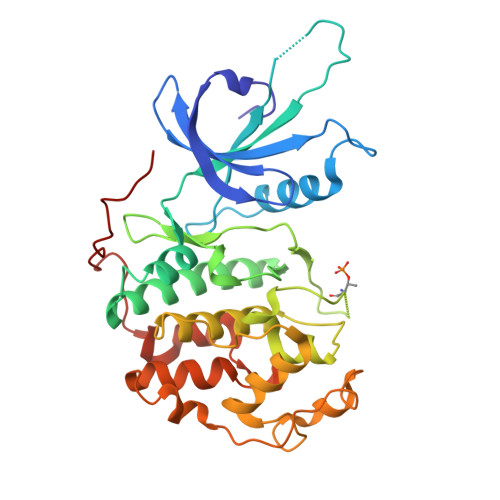
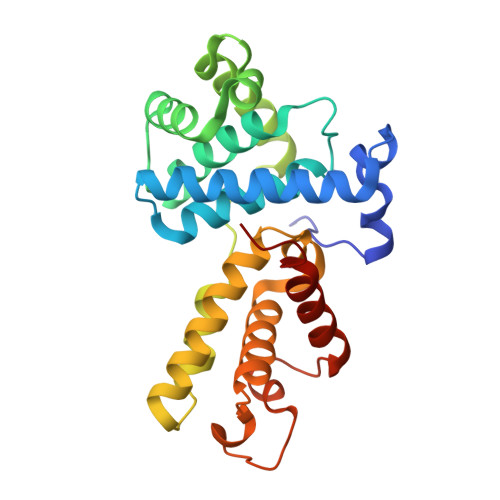
Previous studies highlight the therapeutic promise of inhibiting cyclin-dependent kinases 12 and 13 (CDK12/13) for castration-resistant prostate cancer (CRPC) and other malignancies. However, developing small molecule modulators of CDK12/13 that exhibit an optimal combination of potency, selectivity and favorable pharmacokinetics (PK) remains challenging. In this study, we present ZLC853 , a potent, selective, and orally bioavailable covalent inhibitor of CDK12/13 developed through PK-oriented optimization of our previously reported inhibitor YJZ5118. ZLC853 potently inhibited CDK12 and CDK13 with IC 50 values of 40.0 and 18.2 nmol/L, respectively, and displayed exceptional kinase selectivity in a comprehensive KinomeScan assay. Its covalent binding mechanism was unequivocally validated through mass spectrometry, co-crystal structure analysis, cellular pull-down assays, and washout experiments. Functionally, ZLC853 suppressed the transcription of DNA damage response genes, induced DNA damage, and promoted apoptosis. Additionally, ZLC853 exhibited good oral bioavailability and robust antitumor activity across multiple prostate cancer models, both in vitro and in vivo , supporting it as a promising candidate for clinical investigation.
- State Key Laboratory of Chemical Biology, Shanghai Institute of Organic Chemistry, Chinese Academy of Sciences, Shanghai 200032, China.
Organizational Affiliation: